Tag: GenomeBeans

  • Demystifying Immunomics: A Researcher’s Guide to TCR and BCR Repertoire Profiling

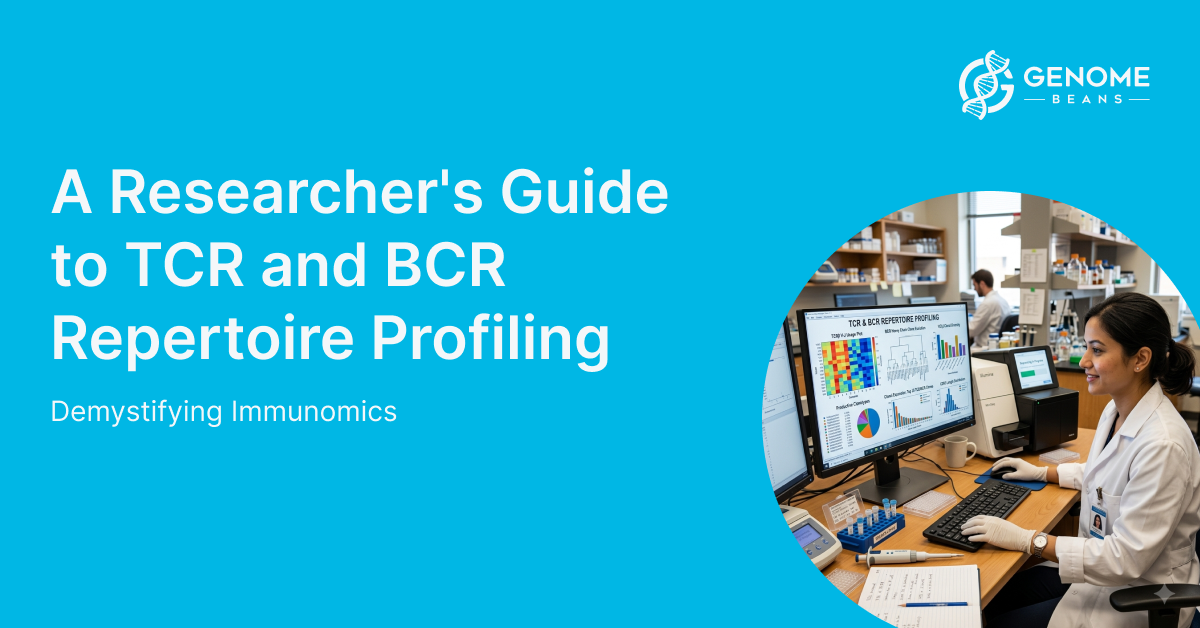
    Demystifying Immunomics: A Researcher’s Guide to TCR and BCR Repertoire Profiling

    A researcher dedicates months to carefully design experiments to probe immune responses. Now, terabytes of raw sequencing data are waiting to be analyzed. The goal of identifying specific phenotypes or tracking immune cell dynamics is challenging, and the computational analysis required to extract these insights can feel tricky.

    This is where our immunomics analysis comes into play. It transforms raw data into actionable biological understanding without demanding specialized coding skills. The following guide breaks down the core concepts of immune repertoire profiling, focusing on T-cell receptors (TCRs) and B-cell receptors (BCRs).

    What is Immunomics?

    Immunomics is the study of the immunome, encompassing the genes, proteins, and molecular interactions that define the immune system’s functional states. Instead of analyzing isolated immune markers, it provides a holistic view of entire immune cell populations and their functional states.

    At its core, an Immunomics pipeline characterizes the immune repertoire, i.e., the full diversity of TCRs and BCRs. The adaptive immune system relies on this diversity to recognize pathogens; profiling it offers a molecular snapshot of an individual’s immune history, vaccine efficacy, and disease progression.

    TCR vs. BCR Repertoire: Structural Differences

    TCRs and BCRs enable highly specific antigen recognition and they have distinct architectures and mechanisms:

    • T-Cell Receptors (TCRs): Typically membrane-bound heterodimers composed of an alpha ($\alpha$) and a beta ($\beta$) chain. Most TCRs recognize processed peptide antigens presented by MHC molecules on antigen-presenting cells, though subsets such as $\gamma\delta$ T cells and NKT cells can recognize antigens independently of classical MHC presentation.
    • B-Cell Receptors (BCRs): Membrane-bound antibodies shaped like a “Y”, comprising two identical heavy chains and two identical light chains. BCRs directly recognize both conformational and linear epitopes on intact antigens without needing MHC presentation.

    How Immune Repertoire Diversity is Generated

    The astronomical diversity of TCRs and BCRs is driven by V(D)J recombination. This genetic mechanism randomly rearranges distinct segments to assemble a functional receptor:

    • V (Variable) Segment: Codes for the initial part of the antigen-binding site.
    • D (Diversity) Segment: Found in heavy chains and TCR beta/delta chains, contributing additional sequence diversity at the nucleotide level during recombination.
    • J (Joining) Segment: Links the variable domains to the constant region.
    • Junctional Diversity: Random N-nucleotide additions inserted directly between these segments during the recombination process.

    During this process, random nucleotide additions occur at the junctions to create junctional diversity. The most hypervariable region arising from this junction is the Complementarity Determining Region 3 (CDR3). Because the CDR3 loop directly dictates antigen specificity, sequencing this region is the cornerstone of immune repertoire analysis.

    Strategic Applications in Biomedical Research

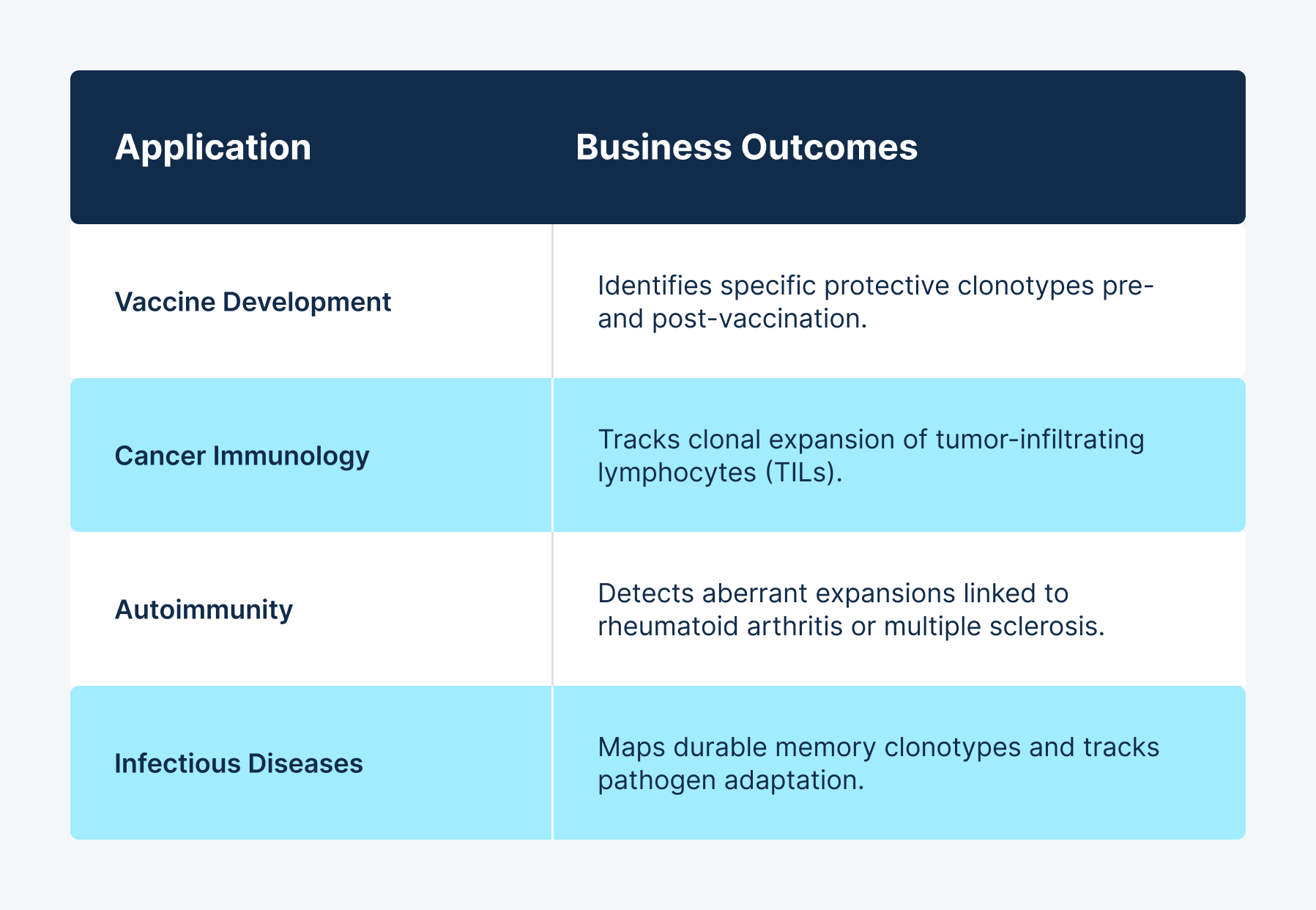
    High-throughput NGS sequences millions of individual receptor reads, which following computational processing, enables mapping of clone frequencies across several critical fields:
    A table mapping biotechnology applications to business outcomes, including Vaccine Development, Cancer Immunology, Autoimmunity, and Infectious Diseases.

    Key Metrics in Bioinformatic Interpretation

    Accurately interpreting immunomics data requires monitoring five primary metrics:

    1. Diversity Indices: Metrics like Shannon entropy or the Simpson index quantify the overall diversity of the repertoire by accounting for both the number of unique clonotypes and their relative abundances.
    2. Clonal Expansion: Tracks the frequency of specific clonotypes reacting to an antigenic stimulus.
    3. Public Clonotypes: Identifies shared TCR or BCR sequences across different individuals to find conserved immune responses.
    4. V(D)J Gene Usage: Evaluates biases or preferences in gene segment selection during recombination.
    5. Data Normalization: Adjusts for variations in sequencing depth to allow accurate sample-to-sample comparisons.

    Accelerate Your Immunomics Research

    Processing millions of sequencing reads frequently creates a bioinformatic bottleneck. If you are spending more time troubleshooting command-line scripts than interpreting biological findings, you might ask: is bioinformatics just about coding? Fortunately, automated pipelines offer a scalable alternative.

    Standardized cloud platforms handle the computational heavy lifting, yielding publication-ready reports while letting you focus entirely on the science.

    Transform Your Raw Sequencing Data Into Discovery

    Don’t let complex bioinformatic pipelines stall your research momentum. Upload your raw NGS data to GenomeBeans and receive fully analyzed, publication-ready immunomics reports in hours, with zero coding required.

    Ready to accelerate your immune profiling?

    Contact our team to discuss your project, request a demo, or submit your first dataset for automated analysis today.

  • Hundreds of Variants, Zero Diagnosis: Why Trio Exome Sequencing Is Changing Rare Disease Research

    Hundreds of Variants, Zero Diagnosis: Why Trio Exome Sequencing Is Changing Rare Disease Research

    You’ve got a patient with a constellation of baffling symptoms, a family history riddled with question marks, and a growing sense of urgency. Standard genetic testing has come up empty, leaving you sifting through mountains of inconclusive data. The clock is ticking, and the pressure to find answers is mounting. Could trio exome sequencing be the breakthrough you need?

    For researchers and clinicians tackling rare and undiagnosed diseases, trio exome sequencing – analyzing the genomes of affected individuals alongside their parents – offers a powerful strategy to filter out irrelevant variants and pinpoint causal mutations with greater precision. This approach dramatically accelerates the diagnostic process and paves the way for targeted therapies.

    What is the best genetic testing for rare diseases?

    The “best” genetic testing for rare diseases is highly context-dependent, varying according to factors like the suspected mode of inheritance, the availability of family members for testing, and prior clinical findings. However, trio-based whole exome sequencing has emerged as a particularly effective strategy. (Notably, singleton whole-genome sequencing has shown comparable retrospective diagnostic yields in recent prospective studies for a significant subset of cases, especially when the underlying genetic cause remains elusive after initial investigations.) Traditional methods like single-gene testing or targeted panels can be time-consuming and inefficient, especially when the phenotype is broad or atypical.

    Trio exome sequencing offers several advantages. First, it provides a comprehensive survey of the protein-coding regions of the genome, capturing approximately 85% of known disease-causing variants. Second, by analyzing the genomes of the affected individual and their parents simultaneously, it allows for powerful filtering strategies based on inheritance patterns. For example, in autosomal recessive disorders, the affected child typically inherits one copy of the mutated gene from each parent, who are themselves carriers. In de novo mutations, the variant is present in the child but absent in both parents. Identifying these inheritance patterns is significantly easier – and more accurate – when using a trio approach. This drastically reduces the number of candidate variants, making the interpretation process more manageable and increasing the likelihood of a definitive diagnosis.

    Is trio exome sequencing highly relevant in prenatal diagnostics?

    Yes, trio exome sequencing is increasingly relevant in prenatal diagnostics, particularly in cases where ultrasound findings reveal fetal anomalies or when there is a family history of a genetic disorder. While traditional prenatal testing methods like karyotyping and chromosomal microarray analysis (CMA) can detect large chromosomal abnormalities, they often fail to identify single-gene disorders or more subtle genetic variations. Rapid exome sequencing, applied in a trio design, can provide valuable diagnostic information in these situations, allowing for more informed decision-making during pregnancy.

    One of the key applications of trio exome sequencing in prenatal diagnostics is in cases of fetal structural anomalies detected by ultrasound. If initial genetic testing (e.g., CMA) is normal, exome sequencing can be used to investigate the possibility of a monogenic disorder underlying the anomaly. The trio design is particularly useful here, as it allows for the clear identification of inheritance patterns and de novo mutations. Furthermore, it can help differentiate between pathogenic variants and benign polymorphisms, reducing the likelihood of false-positive results and unnecessary anxiety for parents. The ethical considerations surrounding prenatal exome sequencing are complex, requiring careful counseling and informed consent. However, studies report a prenatal diagnostic yield of 15–41% after a normal chromosomal microarray, depending on the anomaly type.

    How is next-generation sequencing transforming rare and undiagnosed disease genetics?

    Next-generation sequencing (NGS) technologies have revolutionized the field of rare and undiagnosed disease genetics by enabling researchers to investigate the entire genome (whole-genome sequencing, WGS) or the protein-coding regions (whole-exome sequencing, WES) with unprecedented speed and cost-effectiveness. This has led to the discovery of numerous novel disease-causing genes and has provided new insights into the genetic architecture of complex traits. Unlike traditional methods that focused on candidate genes or specific chromosomal regions, NGS allows for an unbiased and comprehensive survey of the genome, uncovering previously unknown genetic contributors to disease.

    One of the key ways in which NGS is transforming rare and undiagnosed disease genetics is by facilitating the identification of rare variants with large effect sizes. These variants, which may be present in only a small fraction of the population, can have a significant impact on disease risk. NGS also allows for the study of structural variants, such as copy number variations (CNVs) and translocations, which are often missed by traditional genotyping methods. Furthermore, NGS is enabling the integration of genomic data with other ‘omics’ data, such as transcriptomics, proteomics, and metabolomics, providing a more holistic understanding of disease pathogenesis. This systems-level approach is crucial for unraveling the complex interplay between genes, environment, and lifestyle factors that contribute to rare and undiagnosed diseases.

    The application of machine learning and artificial intelligence to NGS data is further accelerating the pace of discovery, enabling researchers to identify subtle patterns and predict disease risk with greater accuracy. The use of the GenomeBeans platform is streamlining NGS data analysis for scientists and researchers. The GenomeBeans platform enables researchers and scientists to spend more time on discovery research rather than complex NGS data analysis.

    Practical Considerations for Trio Exome Sequencing Studies

    Implementing a successful trio exome study involves careful planning and execution. Here’s a checklist to guide your approach:

    • Patient Selection: Prioritize cases with a strong clinical suspicion of a genetic disorder, negative or inconclusive results from prior genetic testing, and the availability of parental samples.
    • Informed Consent: Ensure comprehensive genetic counseling and obtain informed consent from all participants, addressing potential risks, benefits, and limitations of exome sequencing.
    • Sample Collection and Processing: Use high-quality DNA samples and follow established protocols for library preparation and sequencing.
    • Data Analysis Pipeline: Implement a robust bioinformatics pipeline for sequence alignment, variant calling, and annotation. Consider using a platform like GenomeBeans to streamline this process.
    • Variant Filtering: Apply appropriate filtering strategies based on inheritance patterns, variant frequency in population databases, and predicted functional impact.
    • Variant Prioritization: Prioritize variants based on their clinical relevance, biological plausibility, and consistency with the patient’s phenotype.
    • Sanger Sequencing Validation: Confirm candidate variants by Sanger sequencing to rule out false positives.
    • Clinical Interpretation: Consult with a clinical geneticist or molecular geneticist to interpret the findings and provide appropriate recommendations.
    • Data Sharing: Consider contributing data to public databases to facilitate gene discovery and improve diagnostic accuracy.

    Careful attention to these details will enhance the power and impact of your trio exome sequencing studies.

    The Future of Trio Exome Sequencing

    The field of trio exome sequencing is rapidly evolving, driven by technological advancements and increasing clinical adoption. As sequencing costs continue to decline and analytical tools become more sophisticated, trio exome sequencing is poised to become an even more integral part of the diagnostic workup for rare diseases. The integration of long-read sequencing technologies, which can resolve complex genomic regions and improve variant calling accuracy, promises to further enhance the diagnostic yield of exome sequencing. Furthermore, the development of more sophisticated algorithms for variant prioritization and interpretation, incorporating data from multiple sources such as gene expression profiles and protein structures, will facilitate the identification of causal variants with greater confidence. The ultimate goal is to provide faster, more accurate diagnoses for patients with rare diseases, enabling personalized treatment and improved outcomes.

    As our understanding of the human genome deepens and as technologies continue to advance, trio exome studies will continue to contribute valuable genetic insights that were previously impossible.

    Trio exome sequencing offers more than just a test; it’s a pathway to answers when you need them most. Unlock the potential of your sequencing data—upload your files to GenomeBeans and run your first analysis today. See how quickly and easily you can transform raw data into actionable insights, without needing any specialized bioinformatics expertise.

  • Malaria’s Genetic Evolution: A Growing Global Challenge

    Malaria’s Genetic Evolution: A Growing Global Challenge

    Malaria is often seen as a long-standing disease we already understand. But in reality, it is constantly evolving at the genetic level. In 2024 alone, malaria caused an estimated 282 million cases and over 600,000 deaths worldwide, highlighting its continued global impact.

    Beyond these numbers lies a more complex challenge. The malaria parasite is quietly adapting in ways that affect diagnosis, treatment, and disease control strategies, making it harder to manage with traditional approaches.

    Uneven Global Burden of Malaria

    Malaria does not affect all regions equally. The WHO African Region continues to carry the highest burden, accounting for the majority of cases and deaths, with young children being the most vulnerable.

    At the same time, malaria is caused by multiple Plasmodium species, each with distinct characteristics. P. falciparum remains the most severe and dominant species in Africa, while P. vivax is more common in other regions.

    This diversity adds complexity to malaria control and prevention, as strategies must account for differences in parasite biology and geographic distribution.

    When Diagnosis Becomes Challenging

    One of the most concerning developments in recent years is the rise of diagnostic escape.

    Most rapid diagnostic tests (RDTs) detect specific proteins produced by the malaria parasite. However, certain strains are evolving in ways that prevent these proteins from being expressed, making infections harder to detect.

    This means:

    • Some malaria cases may go undiagnosed
    • Transmission can continue unnoticed
    • Surveillance data may become less reliable

    These genetic changes have already been reported in multiple malaria-endemic regions, raising concerns about the long-term effectiveness of current diagnostic tools.

    Rising Drug and Insecticide Resistance

    Malaria control efforts are also being challenged by increasing resistance.

    Artemisinin-based therapies, which have been the cornerstone of malaria treatment, are showing early signs of reduced effectiveness in some regions. This threatens one of the most reliable treatment options available today.

    At the same time, mosquito vectors are adapting. Insecticide resistance is becoming more common, and species like Anopheles stephensi are expanding into new environments, including urban areas.

    Together, these changes are making malaria:

    • harder to treat
    • more difficult to control
    • less predictable in its spread

    Why Genomic Surveillance Matters

    As malaria evolves, traditional research methods alone are no longer sufficient.

    This is where genomic surveillance becomes essential. By analyzing the genetic makeup of parasites and vectors, researchers can gain deeper insights into how malaria is changing.

    Genomic approaches help in:

    • tracking resistance markers
    • identifying emerging parasite strains
    • understanding transmission patterns
    • monitoring vector adaptation

    This allows scientists to move from reactive responses to proactive disease management.

    From Data to Actionable Insight

    Modern malaria research generates large and complex datasets, including parasite genomes, vector populations, and gene expression data.

    While sequencing technologies have become more accessible, interpreting this data remains a significant challenge. The true value of genomics lies not just in generating data, but in extracting meaningful insights from it.

    Accurate genomic data analysis and bioinformatics workflows are critical for turning raw sequencing data into conclusions that can guide real-world decisions.

    Supporting Malaria Research with Genomics

    At GenomeBeans, we work with researchers handling complex genomic datasets, including those related to infectious diseases like malaria.

    Our focus is on simplifying:

    • genetic variation analysis
    • resistance marker identification
    • population-level genomic studies
    • large-scale data interpretation

    By making genomic analysis more accessible and reliable, we help researchers focus on advancing malaria research and public health outcomes.

    Looking Ahead: Staying Ahead of Malaria Evolution

    Malaria is not standing still and neither can research. As the parasite and its vectors continue to evolve, staying ahead will depend on how effectively we understand these changes at the genetic level.

    With the right tools and insights, it becomes possible not only to respond to malaria but to anticipate it, leading to more effective strategies for control, prevention, and eventual elimination.

    Frequently Asked Questions (FAQs)

    What is malaria and what causes it?
    Malaria is an infectious disease caused by Plasmodium parasites, transmitted through the bite of infected Anopheles mosquitoes.

    Why is malaria still a global challenge?
    Malaria remains a major health issue due to high transmission rates, regional disparities, and the parasite’s ability to evolve and resist treatments.

    What is diagnostic escape in malaria?
    Diagnostic escape occurs when malaria parasites evolve in ways that prevent detection by standard diagnostic tests, leading to undiagnosed infections.

    How does genomics help in malaria research?
    Genomics helps track genetic changes in parasites, identify resistance markers, and understand transmission patterns for better disease control.

    What is genomic surveillance?
    Genomic surveillance involves analyzing genetic data to monitor how diseases evolve, spread, and respond to treatments over time.

    What is the future of malaria control?
    The future depends on integrating genomics, improved diagnostics, new treatments, and global collaboration to stay ahead of evolving malaria strains.

  • Key to the Biological Lock: DNA Structure to Genomics

    Key to the Biological Lock: DNA Structure to Genomics

    Inside every cell lies a code compact, precise, and incredibly powerful. DNA (Deoxyribonucleic Acid) is the fundamental molecule of life, carrying genetic instructions that define how organisms grow, function, and evolve.

    Each year on April 25, DNA Day is celebrated to honor one of the most important discoveries in science. It reflects how far we have come from understanding the DNA structure to advancing into the era of modern genomics and genetic research.

    Two Breakthroughs That Changed Biology Forever

    The foundation of modern genetics rests on two major milestones that reshaped biology.

    The first was in 1953, when scientists discovered the double helix structure of DNA. This discovery revealed how genetic information is stored in a stable, organized structure made of four nucleotide bases – A, T, G, and C. It explained how traits are inherited and how biological information is passed across generations.

    The second major milestone was the Human Genome Project (2003), an international effort that mapped nearly all human genes. This breakthrough helped scientists understand that complex traits are not controlled by single genes but by networks of interacting genetic elements.

    Together, these discoveries laid the foundation for molecular biology, biotechnology, and modern genomics research.

    The Completion of the Human Genome

    Although the Human Genome Project was a historic success, parts of the genome remained incomplete due to technological limitations in sequencing repetitive DNA regions.

    This gap was finally closed in 2022 by the Telomere-to-Telomere (T2T) Consortium, which produced the first complete human genome sequence.

    This achievement improved our understanding of:

    • previously hidden genomic regions
    • chromosome structure and stability
    • genetic variation linked to disease

    It marked a major advancement in DNA sequencing technology and genome assembly science.

    From DNA Sequence to Functional Genomics

    Modern genomics is no longer just about reading DNA, it focuses on understanding how DNA works inside cells.

    Large-scale projects like ENCODE (Encyclopedia of DNA Elements) are helping scientists identify functional regions of the genome that control gene activity.

    This has expanded the field of functional genomics, which studies how genes are regulated and expressed in different biological conditions.

    Key areas of focus include:

    • gene regulation and expression
    • non-coding DNA functions
    • epigenetic changes
    • RNA and transcriptomics

    This shift is helping scientists understand how identical DNA can produce completely different cell types in the body.

    How Genomics Is Transforming Medicine

    One of the biggest impacts of DNA sequencing and genomics research is in healthcare. Medicine is increasingly shifting from a general approach to a more precise system where treatment is guided by an individual’s genetic information.

    Genomics is now widely used in:

    • Genetic diagnostics: Early detection of inherited disorders by identifying DNA variations linked to disease risk.
    • Cancer research: Identifying mutations that drive tumor growth, enabling more targeted treatment approaches.
    • Personalized medicine: Designing treatments based on a patient’s DNA for better effectiveness and fewer side effects.

    These advancements are making healthcare more accurate, predictive, and patient-specific, driving the growth of precision medicine.

    Beyond Medicine: Expanding Role of Genomics

    Genomics is not limited to healthcare, it is transforming multiple scientific fields.

    In agriculture, it is helping develop crops that are more resistant to drought, pests, and climate stress. In microbiology, it is used to study microbial communities and track antibiotic resistance. In evolutionary biology, it helps reconstruct the history of species using genetic data.

    Across all these fields, genomic research and DNA sequencing technologies are unlocking deeper insights into life at the molecular level.

    The Challenge of Genomic Data

    With the rapid advancement of sequencing technologies, the volume of biological data is increasing at an unprecedented rate.

    Techniques such as whole genome sequencing, transcriptomics, and metagenomics generate massive datasets that require advanced computational analysis.

    The challenge today is not data generation, but data interpretation. Researchers rely on:

    • bioinformatics tools
    • machine learning models
    • computational biology methods

    to convert raw data into meaningful biological insights.

    Supporting the Future of Genomic Research

    At GenomeBeans, we help researchers simplify complex genomic datasets into clear and actionable insights.

    We focus on supporting gene expression analysis, variant interpretation, multi-omics integration, and large-scale sequencing data processing. By reducing analytical complexity, we enable scientists to focus more on discovery and innovation in genomics research and bioinformatics.

    The Future of Genomics

    The field of genomics continues to evolve rapidly. Each breakthrough—from the discovery of DNA structure to complete genome sequencing—has expanded our understanding of life.

    The future will likely be shaped by AI-powered genome analysis, real-time sequencing technologies, and advanced gene-editing tools like CRISPR. These innovations could enable earlier disease detection, improved treatments, and new possibilities in biological engineering.

    Frequently Asked Questions

    What is DNA Day?

    DNA Day is celebrated on April 25 to mark the discovery of the DNA double helix (1953) and the completion of the Human Genome Project (2003). It highlights the importance of DNA in genetics and modern biology. It also promotes awareness about advances in genomics and genetic research worldwide.

    Why is the DNA double helix important?

    The DNA double helix explains how genetic information is stored, copied, and passed from one generation to another. It forms the foundation of modern genetics and molecular biology.

    What is the Human Genome Project?

    The Human Genome Project was a global scientific effort that mapped nearly all human genes, helping researchers better understand genetic diseases and human biology.

    What is genomics?

    Genomics is the study of the complete set of DNA in an organism and how genes interact to influence traits and biological functions. It focuses on understanding the entire genome rather than individual genes alone.

    How is genomics used in medicine?

    Genomics is used for disease diagnosis, cancer research, and personalized medicine, where treatments are based on a person’s genetic profile.

    What is the future of genomics?

    The future of genomics includes AI-based analysis, gene editing, precision medicine, and faster DNA sequencing technologies.